If you're searching for yoga in Canggu, you're probably trying to figure out one thing: Where do serious practitioners actually practise? Canggu has exploded over the last few years. What used to be a surf village is now one of Bali's most progressive wellness hubs. But with that growth comes noise. There are dozens of options for yoga classes Canggu. Plenty of "Instagrammable" studios. Endless drop-ins. But if you're looking for quality depth, intelligent teaching, real progression, you need more than just a beautiful shala.
Why Yoga in Canggu Has Become a Global Hub
Canggu is different from traditional yoga destinations. It blends surf culture, performance and recovery, conscious entrepreneurship, and international movement professionals. The result? Yoga here is modern, integrated, and evolving. Instead of purely spiritual retreat culture, you'll find:
- Intelligent Vinyasa sequencing
- Yin informed by fascia research
- Breathwork grounded in nervous system science
- Recovery programming designed for athletes and active bodies
This is yoga that supports real life, not just a vacation.
Where to Practise: Finding the Right Canggu Yoga Studio
When choosing a Canggu yoga studio, look beyond aesthetics. Ask: Is there consistent faculty? Is the programming educational? Are teachers experienced or rotating short-term visitors? Does the studio support progression? A strong studio isn't just about beautiful design. It's about depth.
Drop-In Yoga Canggu: Is It Enough?
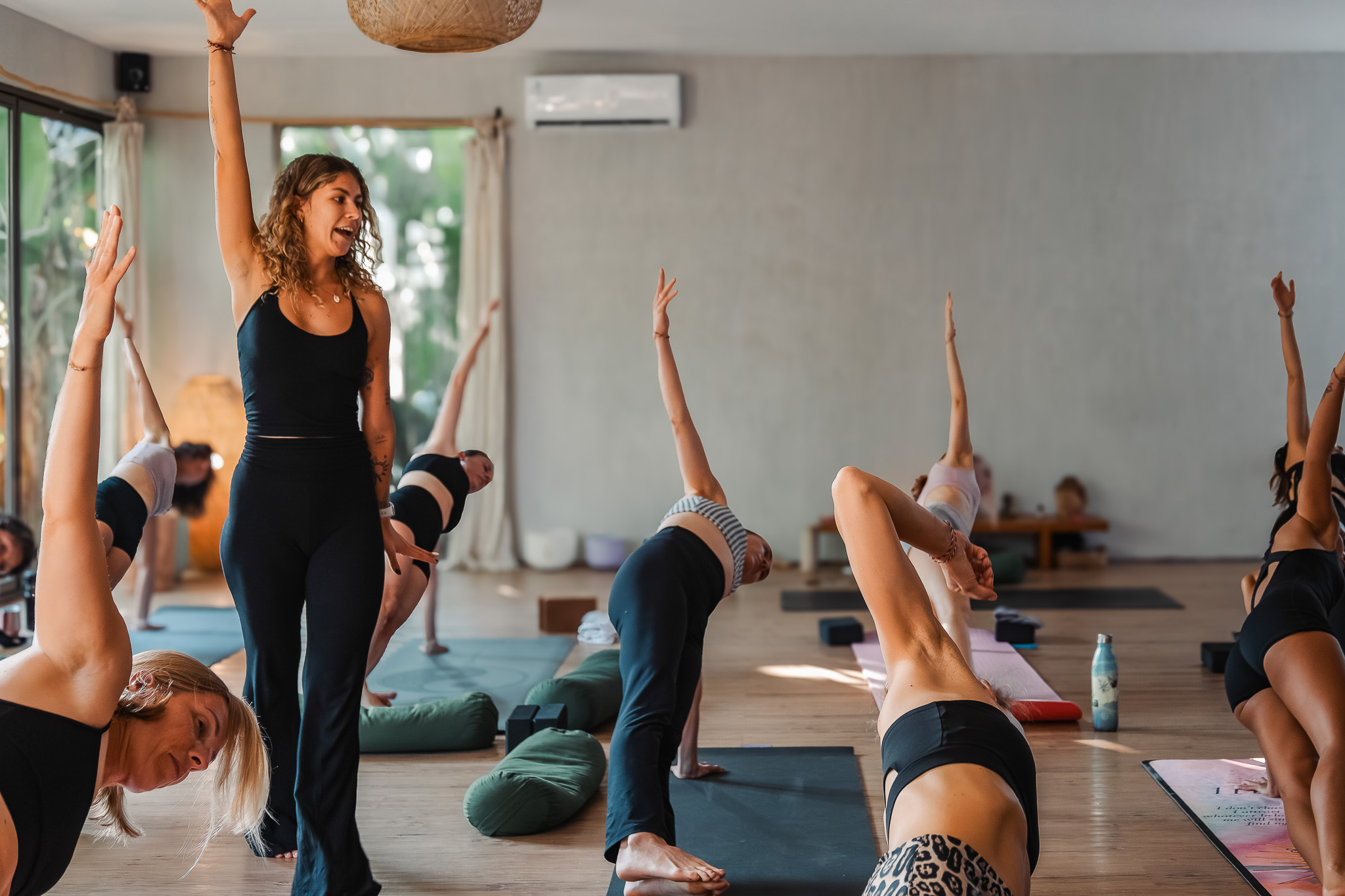
If you're visiting for a short time, drop-in yoga Canggu options are easy to find. Most studios offer single class passes, weekly unlimited options, morning and sunset flows, and Yin and mobility sessions.
Drop-ins are perfect if you want to explore different styles, are here for under two weeks, or just want to maintain your practise. But if you're staying longer, or feeling called to deepen your understanding, drop-ins eventually hit a ceiling. That's where structured training makes a difference.
Teacher Training in Canggu: The Next Level
Canggu has quietly become one of the most respected locations for yoga teacher training in Bali. Why? Because the culture supports it. You're surrounded by movement specialists, breathwork facilitators, somatic educators, strength and conditioning coaches, and conscious business owners.
This creates an ecosystem where training feels relevant, not isolated. If you're considering a 200-hour yoga teacher training Bali, choosing Canggu means you're stepping into a progressive environment that prepares you for modern teaching.
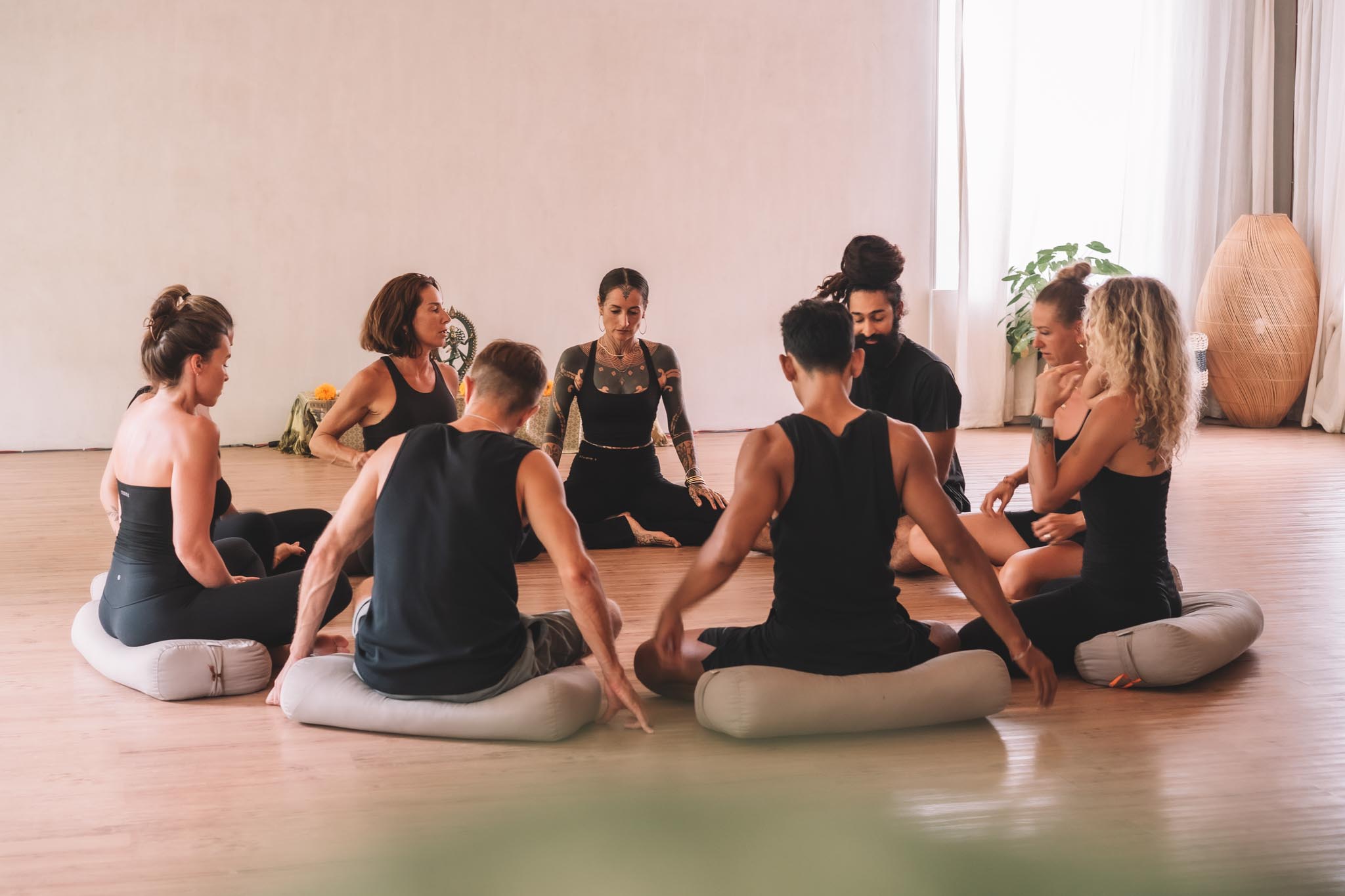
At The Path, our approach to training includes: Intelligent Vinyasa methodology, functional anatomy, nervous system literacy, real practise teaching labs, and professional development.
Why Recovery Is Now Essential in Modern Yoga
Here's something that's changed in the yoga world. We no longer separate intensity from recovery. In Canggu, many practitioners surf daily, lift weights, train in mobility, and practise Vinyasa. Without recovery, burnout happens.
That's why integrated wellness centres, including dedicated recovery areas, are becoming central to serious practise. A proper recovery space supports nervous system regulation, muscle repair, fascia hydration, injury prevention, and sustainable training.
At The Path, movement, breath, and recovery are not separate departments. They're part of the same philosophy. You don't just practise hard. You recover intelligently.
What Makes Yoga in Canggu Unique in 2026
The yoga scene here has matured. We're seeing smaller, more focused teacher trainings, increased fascia and somatics education, trauma-informed facilitation, and integration of breathwork into daily classes. The era of purely aesthetic yoga is fading. The future is integrated. Canggu is ahead of that curve.
Comparing Canggu to Ubud for Yoga
This question comes up constantly. Canggu offers ocean energy, an active lifestyle, an entrepreneurial community, modern training culture, and a strong international network. Ubud offers a jungle environment, traditional spiritual setting, retreat-heavy programming, and a slower rhythm.
If your intention is professional development, daily community practise, or combining movement with business or creativity, Canggu often feels more aligned. If your intention is silence and retreat, Ubud may be a better fit. It's not about better or worse. It's about your stage of life.
Who Thrives in the Canggu Yoga Environment?
Canggu attracts people who are self-motivated, curious, growth-oriented, and professionally driven. If you want yoga to be a lifestyle, a career, or a foundation for long-term growth, this environment supports that.
When Is the Best Time to Practise Yoga in Canggu?
Dry season (May–October) brings larger class sizes, more visiting teachers, and higher energy. Wet season (November–April) offers more intimate classes, easier accommodation, and quieter beaches. For focused teacher training, shoulder seasons often provide the ideal balance.
Final Thought:
Yoga in Canggu isn't just popular. It's progressing. The community here blends movement science, conscious culture, professional ambition, and integrated recovery. For serious students, this matters. You're not just stepping into a class. You're stepping into an ecosystem. If you're ready to practise in a space that values intelligence, depth, and long-term growth: Canggu offers energy. The right studio offers direction. Choose both wisely.